Operations | Monitoring | ITSM | DevOps | Cloud

Introducing the CloudZero AI Prompt Catalog: 46 Ready-to-Use Prompts for Cost Intelligence

In early March, we launched the CloudZero AI Hub and the CloudZero Claude Code plugin, giving customers a direct line to their cloud and AI cost data through natural language. Early adopters and power users have already jumped in, using the plugin to investigate cost spikes, close commitment gaps, and get to cost-per unit metrics that used to take days to pull together. What we’ve noticed over the past few weeks is pretty consistent (and predictable).


How AI-Powered Phishing Is Changing What 'Suspicious Email' Looks Like

For years, spotting a phishing email was almost a checklist exercise. Look for typos, watch for broken grammar, be suspicious of generic greetings like "Dear user," and check if the sender's address looks strange. That mental model worked because phishing emails actually looked bad. Which is no longer true. With the rise of AI, attackers can generate emails that are grammatically perfect, context-aware, and indistinguishable from legitimate business communication. The obvious red flags are gone. What used to look suspicious now looks completely normal.

The Trust Layer: Why Enterprise AI Needs a Gateway Before It Needs More Models

Enterprise AI does not have a model problem. It has a trust problem. Before organizations invest in larger models or additional agents, they need a control layer that governs how those agents operate inside production systems. Without that layer, autonomy does not scale. If you talk to any enterprise leader right now, you’ll hear the same question.

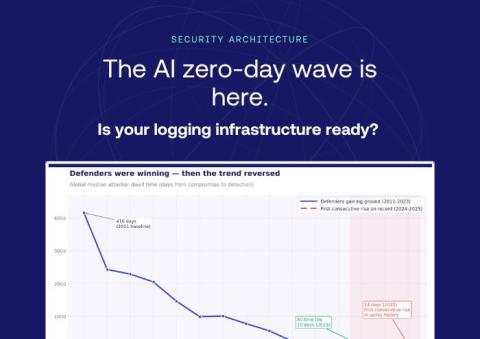
The AI Zero-Day Wave Is Here. Is Your Logging Infrastructure Ready?

Last week, the cybersecurity industry received a signal it cannot afford to ignore. Anthropic announced Claude Mythos Preview: a general-purpose frontier AI model that, without any explicit training for the task, autonomously discovered and fully exploited zero-day vulnerabilities across every major operating system and web browser. Not theoretical capabilities.

User Feedback to Pull Request in Minutes with Cursor + Sentry

Cursor Automations + Sentry Triggers: go from user feedback to a pull request automatically. See how to set up an end-to-end workflow that turns feedback into code changes, posts the PR to Slack, and keeps your team in the loop. In this video, we walk through a real-world example using Sentry Docs. A user submits feedback through a widget on the docs site, it lands in Sentry as an issue, and when assigned, a Cursor Automation kicks off. The automation reads the feedback, validates it, generates a PR against the repo, and posts the link in the relevant Slack thread. No manual work required.

Offline evaluation for AI agents: Best practices

If you’re building LLM-powered applications and agents, you’ve probably asked yourself: “How do I know if my changes actually made things better?” You can tweak prompts, adjust temperature settings, or try different models, but it’s not always easy to validate whether version B’s response is better than version A’s. Most teams fly blind in preproduction and rely on user feedback to see how well their application works in the real world.

Stopping Kubernetes cloud waste: agentic automation for enterprise fleets

Agentic Kubernetes resource reclamation is the practice of using an autonomous control plane to continuously identify, suspend, and delete idle infrastructure across a multi-cloud Kubernetes fleet. It replaces manual cleanup and reactive autoscaling with intent-based policies that act on business state, eliminating the configuration drift and cloud waste typical of unmanaged fleets.

Building an agentic content production system with Claude Code

This post by an engineer explains how his team uses the.claude folder in Claude Code. The folder is the hidden directory where you store context files, behavioral rules, and automated workflows so Claude understands how to operate in a specific project. He’d set up coding conventions, tool configs, CI integrations. Very engineering-brained. The tool is called Claude Code, so fair enough. I run a web and content team. We write blog posts, tutorials, and technical guides for a living.