Operations | Monitoring | ITSM | DevOps | Cloud

7 Best AI-Powered Virtual Labs Software for 2026

Virtual labs have been part of technical training programs for years, but the role of artificial intelligence inside these environments is changing how organizations build, manage, and scale hands-on learning experiences. While many discussions around AI focus on content generation or chat-based assistance, some of the most significant developments are happening behind the scenes.

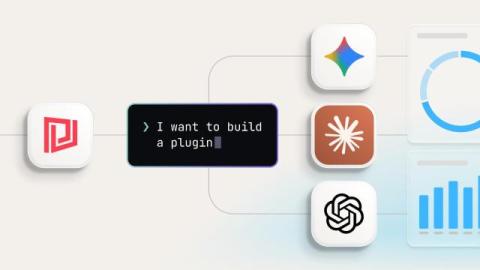
From API to live dashboard - building a SquaredUp plugin with AI

No matter how fast we build, we'll never integrate with every tool. There are too many, new ones appear constantly, and some are too niche to ever reach the top of our roadmap. So if the tool you care about isn't supported yet, your options have been to wait for us to get to it, or build it yourself with our Web API plugin — a powerful, flexible option, though one that asks you to map out the endpoints, authentication and paging yourself.

Optimize Your IT with Ivanti's Autonomous Endpoint Management

Ivanti empowers you to transform your IT operations. With Ivanti's Autonomous Endpoint Management, we deliver complete visibility, a clear financial view to maximize your ROI, and the AI-driven insights you need to operate with absolute confidence. Data is only as good as your ability to act on it. In this video, we dive into the Ivanti AEM Dashboard to show you how a true system of record—powered by AI and Model Context Protocol (MCP)—transforms raw data into actionable IT strategy.

From Commit to Approval, Without Leaving VS Code | Harness Blog

The Harness VS Code Extension is now on the Marketplace. Monitor pipelines, debug logs, approve deployments, and query failures with Claude Code, Copilot, or Cursor, without leaving VS Code. Your Harness pipelines, logs, and deployment approvals are now a sidebar panel away inside VS Code. The Harness VS Code Extension is live on the VS Code Marketplace today, no.vsix download, no manual install.

Agentic AI Governance: 5 Controls Enterprises Need for Safe Automation

The promise of agentic AI is dead simple to understand. Instead of waiting for a human to draft every instruction, an AI agent can interpret a goal, take action, and work across systems until the task is done. For IT teams, that motion sounds like the next logical phase of automation. That promise is real... but it’s also where the risk starts. Traditional automation followed instructions. Agentic AI, by contrast, pursues outcomes. That difference turns the entire governance model on its head.

The 8 stages of AI engineering maturity: a framework for teams

A few months ago, Steve Yegge published his 8 levels of AI-assisted development, and it clicked the moment I read it, because I had lived that exact progression myself, moving from autocomplete to running agents one step at a time. Framed as an AI trust gradient, it finally gave the industry a vocabulary for something most of us were already going through without a name for it. If you haven’t read it, save it for later.

How to land on the right side of the AI divide

AI changed how code gets written before it changed how code gets operated. Generation accelerated; the downstream controls that turn that output into reliable, secure software at a reasonable cost did not keep pace. The result is elevated risk, distributed unevenly across engineering organizations. A recent survey explains why the distribution is so uneven.

AI Economics Pulse: Your AI line item is winning, but is it working?

This edition of the Pulse is shifting lanes. We’re calling it the AI Economics Pulse now, because the question on every finance leader’s mind is whether AI spend and the returns on it can be made to pair at all. That question came to a head over the last few weeks. The bills came due, and they came due in public. Uber burned through its entire 2026 AI budget in four months and capped employee spending on Claude Code and Cursor at $1,500 a month.

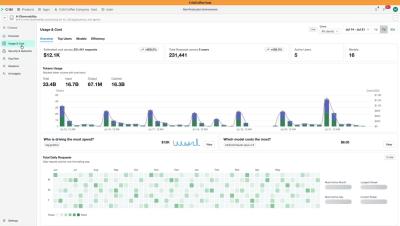
Shipped: The AI spend on your team's laptops is the part you can't see.

Your engineers run Claude Code. Your designers are in Cowork. Half the company has Claude open in a browser tab, and a few are on Cursor. It’s on their laptops, each person authenticated a different way, and none of it touches your gateway. The only record you get is one lump-sum bill at the end of the month. Now you can capture it where it happens – on the laptop.

Claude Code alternatives in 2026: 10 AI coding tools compared on cost, features, and AI ROI

Something unusual happened in the first half of 2026: the most productive AI coding tool on the market became the most financially dangerous. And the companies that discovered this the hard way read like a Fortune 50 roll call.