What's New In JFrog Products - October 2020
During this webinar we will review the most significant changes to the JFrog platform.


The latest News and Information on DevOps, CI/CD, Automation and related technologies.
In this post, we will outline a reference architecture for setting up K3s in a High Availability (HA) configuration. This means that your K3s cluster can tolerate a failure and remain up and running and serving traffic to your users. Your applications should also be built and configured for high availability, but that is beyond the scope of this tutorial. K3s is a lightweight certified Kubernetes distribution developed at Rancher Labs that built is for IoT and edge computing.
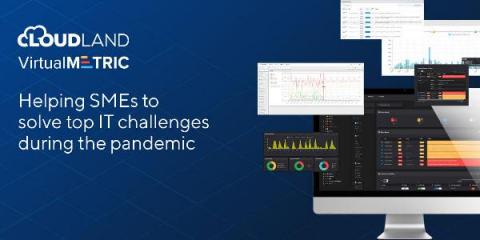
VirtualMetric — the all-in-one monitoring solution provider and CloudLand — one of the leading IT distributors in the Netherlands, join efforts to help SMEs from the DACH region and the Netherlands to overcome the top IT challenges during the pandemic. Although the IT sector is one of the most stable during the global pandemic crisis, small and medium enterprises need to battle their specific problems – internal and external.
Sleuth is a deployment tracking tool that gives you a deeper level of insight into your CI/CD workflows by tracking all of your team’s deployment tools from a single dashboard. Sleuth integrates with different components of your deployment pipeline and develops an understanding of your development processes. It can then automatically alert you as to when code is shipping, when manual approvals are needed, and when failures occur.
These days, the internal workings of Linux applications involve many different moving parts. Sometimes, it can be rather difficult to debug them when things go wrong or run slower than expected. Tracing an application’s execution is one way of understanding potential issues without diving into the source code. To this end, we wrote an app-tracing tool called etrace, designed to detect performance bottlenecks and runtime issues in snaps.
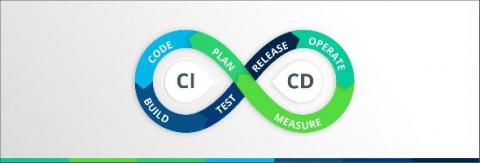
Continuous integration/continuous delivery (CI/CD) is a methodology which helps technology teams deliver higher-quality software faster through automation. At OpsRamp, we have embarked on the journey of CI/CD transformation and have seen tremendous change in the way we build and release our products. Michael Fisher, Group Product Manager, OpsRamp explained the journey and lessons learned in this process during a recent webinar.