The latest News and Information on Incident Management, On-Call, Incident Response and related technologies.
The most frenzied shopping day of the year – Black Friday – is fast approaching, and businesses around the globe are bracing themselves. However, imagine this – a massive number of eager shoppers ready to snag the hottest deal, and just when your website should be working at its best, it crashes, leaving behind frustrated customers and potential revenue slipping through your virtual fingers. This scenario is not entirely fictional.
When it comes to observability, we’ve found that most organizations have ~20 tools installed in their IT environments. With so many tools, it’s difficult for IT leaders to gain insight into how their tools are performing and determine how much value ITOps is bringing to the organization.
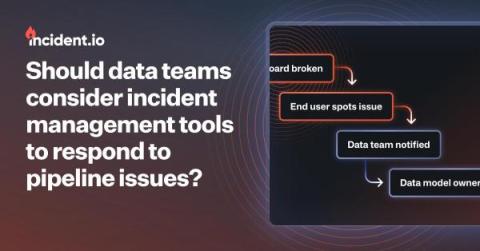
Data teams are adopting more processes and tools that align with software engineering, and from talks at the dbt Coalesce conference in 2023, there’s clearly a big push towards adopting software engineering practices at enterprise scale companies. At the moment, there are a lot of tools in the data space for identifying errors in data pipelines, but no tools for responding to these errors, such as coordinating fixes. This is exactly where an incident management platform makes sense to implement.
Choosing, deploying, maintaining, and rationalizing observability and monitoring tools can be a constant challenge for ITOps, DevOps, and SRE teams. As teams monitor increasingly complex systems, the need for instrumentation that monitors those systems grows at the same rate, leading directly to a growing problem of observability data engineering, integration, and enrichment.