Operations | Monitoring | ITSM | DevOps | Cloud

The latest News and Information on Monitoring for Websites, Applications, APIs, Infrastructure, and other technologies.

IT Service Management for Government and Public Sector Organizations

What happens when a citizen-facing portal fails on the last day of a filing deadline, and the only record of the outage lives in an email thread between two engineers? In a commercial organization, that is an operational embarrassment. In a government department, it is a hole in a statutory record that an auditor will eventually ask about.

PCI DSS Requirement 10: Logging and Monitoring in v4.0.1

Version 4.0 renumbered PCI DSS Requirement 10 from end to end, and the Council retired v3.2.1 on 31 March 2024. Sub-requirement numbers written before then mostly point somewhere else now. Four more Requirement 10 rules changed status on 31 March 2025, automated log review among them. Checking your numbering against v4.0.1 costs an afternoon and saves a finding. In this blog, you will: PCI DSS Requirement 10 covers audit logging and monitoring across the cardholder data environment.

Wide Events vs. Three Pillars: AI Observability Costs

As agentic AI workflows gain traction within organizations, those organizations are asking how to account for their behavior while keeping costs manageable. Some are sticking with the old three pillars of observability approach: take a measurement to create a metric, record output to a log, and track serial progress with a trace. Each of these is useful, but treating them as distinct formats from the start means paying for them distinctly too. Separate storage doesn't come cheap.

Introducing Infrastructure Knowledge: Teach Netdata AI What Your Metrics Can't Show

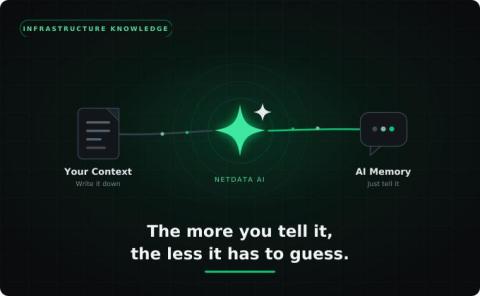
Netdata AI sees everything your infrastructure does: every metric, every anomaly, every alert. It does not see what your infrastructure is: which services matter, which host is supposed to run hot, who owns what, what your team considers normal. Without that context, “CPU at 91%” is just a finding. With it, it might be a machine doing exactly its job.

Assisted, Augmented or Agentic? Choose Your Splunk Starting Point

Episode two of Beyond the Thread explores how organizations can leverage a solid data foundation for AI-driven actions. Hosted by Courtney Wright and featuring experts Greg Ainsley-Malik and Sonal Pardeshi, the discussion delves into the Cisco Data Fabric, powered by the Splunk platform, and its role in transforming machine data into actionable insights. The episode highlights the journey towards agentic operations, addressing the challenges faced in moving from AI-ready data to effective implementations, and examines different adoption strategies that organizations may pursue.

Agentic Operations Start with Context: Build the Right Data Foundation

Episode 1, "Beyond the Thread: Deconstructing the Cisco Data Fabric Powered by the Splunk Platform," explores the intersection of data strategy and operational efficiency. Hosted by Splunk's Courtney Wright, the session features insights from experts Keith McClellan and Michael Sondag on the complexities organizations face in data management and operational models.

From Audit Readiness to Continuous Control: Making Compliance Part of IT Operations

Compliance is often treated as a governance responsibility. But many of the conditions that determine whether controls continue to hold are created inside day-to-day IT operations. Operations teams manage the devices, configurations, changes, dependencies, and remediation activities where compliance can either remain aligned or begin to drift. Governance defines the requirements. Operations manages much of the environment where those requirements must remain true.

Azure Virtual Desktop Monitoring: A Complete Guide

Azure Virtual Desktop (AVD) puts the user’s desktop at the end of a long delivery chain: the Azure control plane, host pools, session hosts, profile storage, the network, and the endpoint on the user’s desk. Any one of them can make a session feel slow, and none of them looks broken from inside the others. That is why performance work on AVD starts with continuous monitoring across the whole chain rather than at either end of it. Azure Virtual Desktop Monitoring is what closes that gap.