Operations | Monitoring | ITSM | DevOps | Cloud

Announcing Logz.io Open 360: One Platform for Open Source Observability

Today, I’m thrilled to announce the introduction of Logz.io Open 360™. This is a major step in our journey. Open 360 is a unified platform for modern engineering teams requiring end-to-end observability across logs, metrics and traces—delivered in an intuitive user interface. Open 360™ is specifically designed to enable engineers to have deep monitoring and insights into distributed systems.

New Honeycomb Integrations Let You Bubble Up Lurking AWS Issues

Today, we’re announcing the expansion of Honeycomb integrations with various AWS services. This update now covers a much wider swath of AWS services, makes it easier to integrate your AWS stack with Honeycomb, and with our new BubbleUp enhancements, you’ll be identifying and debugging hidden issues in your AWS stack faster than ever.

Cribl Supports Multiple AWS Account Monitoring and Analytics with New Account Factory Customization

Keeping with our mission of helping customers gain radical levels of choice and control with their observability data, we’re excited to announce full support for the Amazon Web Services (AWS) Account Factory Customization solution within AWS Control Tower console. Customers can now use AWS Control Tower to define account blueprints that scale their multi-account provisioning in a streamlined manner.

AppSignal for Node.js 3.0 Introduces OpenTelemetry Support

After a period of beta testing, we're happy to announce the launch of our latest AppSignal for Node.js package. This package features six new integrations and uses the OpenTelemetry framework for reliable telemetry data collection. OpenTelemetry is an open standard that facilitates the instrumentation of standardized telemetry data collection. AppSignal is committed to using OpenTelemetry in new integrations, and our Node.js integration is the first to use the standard.

What's new in Rancher 2.7

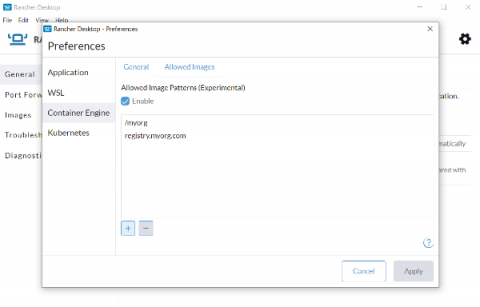
The Rancher Team are excited to announce the general availability of Rancher v2.7. Rancher v2.7 is a monumental milestone in the lifecycle of Rancher and introduces the ability to be a truly interoperable, extensible platform through the concept of extensions. The extensions now make it possible for users to build extensions on top of Rancher with complete autonomy.

The ultimate generation of our Dedicated offering is here!

We are delighted to announce the general availability of Dedicated Generation 3 - the latest evolution of our Dedicated offering. We rewrote it from scratch with the objective of making the Dedicated experience as incredible as on the Grid, while providing the same strong guarantees regarding uptime, compliance, and SLAs. And, not to humblebrag, but we succeeded!

The Upsun CLI is ready to Go(lang)

The developer experience just got so much better with the latest Upsun CLI release. Designed and engineered to help developers manage their daily work environments more efficiently, this incredible tool is ready to Go for our entire developer community, becoming language independent with no need to install PHP, and embracing the distribution standards. With the Upsun CLI, developers can easily use and manage their projects directly from their terminal.

Yes, You Subscribed Correctly. The OPC UA Client Listener Plugin Has Been Released!

This article would not be possible without the contribution of Lars Stegman. The OPC UA Client Listener Plugin was his own contribution to a long-standing issue. Telegraf now includes a new plugin highly anticipated by the community. The OPC UA Client Listener Plugin. So you might be asking yourself: what is the big deal? There was already an OPC UA Plugin — how is this different?

RUM now offers React Native Crash Reporting and Error Tracking

React Native has become the predominant development framework for cross-platform mobile applications. By interacting with native APIs largely under the hood and requiring only a fractional proportion of platform-specific code, it allows you to build applications for iOS, Android, and the browser using the same declarative JavaScript. But this cross-platform adaptability has its downsides.

Introducing Cycle's Infrastructure Abstraction Layer (IAL)

Before I dive into the launch of Cycle’s latest feature (and it’s a big one!) I want to share some context about how we got here. Let’s rewind back to 2015: containers, at least in their modern form, had just begun to take the developer ecosystem by storm. At the same time, we at Cycle were watching everything unfold: from Docker’s meteoric rise to the first few releases of tools like Kubernetes, Rancher, and so on.