Mailchimp
Not subscribed to OpsMatters Newsletter


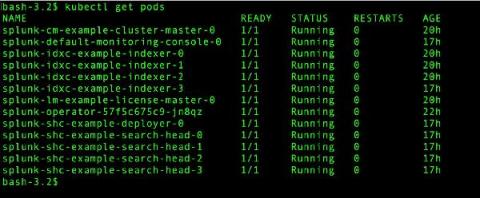
With everything going on in the world, it seems like a lifetime ago that we started talking about the Splunk Operator for Kubernetes, which enables customers to easily deploy, scale, and manage Splunk Enterprise on their choice of cloud environment. During that time, we’ve heard from an increasing number of on-premise and public cloud Bring-Your-Own-License Splunk customers that containerization and Kubernetes are an important part of their current and future deployment plans.
To immediately see how to find potential vulnerabilities or exploits in your Pulse Connect Secure appliance, skip down to the "Identifying, Monitoring and Hunting with Splunk" section. Otherwise, read on for a quick breakdown of what happened, how to detect it, and MITRE ATT&CK mappings.
Since 2009, Juju has been enabling administrators to seamlessly deploy, integrate and operate complex applications across multiple cloud platforms. Juju has evolved significantly over time, but a testament to its original design is the fact that the approach Juju takes to operating workloads hasn’t fundamentally changed; Juju still provides fine grained control over workloads by placing operators right next to applications on any platform.
Organizations today are more vulnerable than ever to cyberattacks and data breaches. Whether the attack is executed by an external actor or an insider, the unauthorized intrusion comes at a great cost. This cost may differ, depending on several factors. These include the cause of the breach, the actions taken to remediate the incident, whether there is a history of data infringements, what data was compromised, and how the organization aligned with the authorities and regulators.
The shift to remote work changed the way IT teams collaborate. Instead of walking over to a colleague’s desk, co-workers collaborate digitally. Looking forward, many companies will continue some form of remote work by taking a hybrid approach. Root cause analysis in IT will always require collaboration as teams look to improve service availability and prevent problems. Sitting in front of the same screen and looking at the same data makes it easy to discuss problems.
We set out with a plan this year to nurture and grow our developer ecosystem. In 2020, we launched our Template Library to empower joint users of LogDNA and our partners to have an out-of-the-box logging experience from every layer of their stack. As the use of these templates has grown, users have told us that they save them time from manually creating Views, Boards, and Screens, and helps them gain insight from their logs much quicker.