Mailchimp
Not subscribed to OpsMatters Newsletter


Since we launched Canvas in 2018, we have seen tons of our users create beautiful dashboards that tell stories with Elasticsearch data. In the spirit of making it even easier to get started, we are creating templates that you can import and get instantly beautiful dashboards for all the data the Elastic Stack captures.
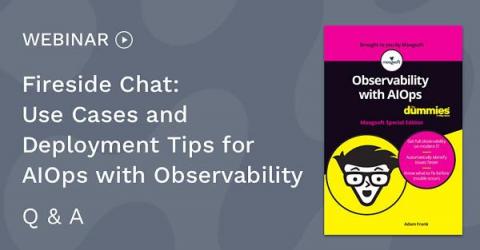
A fireside chat to discuss use cases and deployment tips for AIOps with observability generated a stream of compelling questions from attendees, which the Moogsoft hosts answered with depth and expertise. Combining AIOps analysis with detailed observability data is key for DevOps and SRE teams to attain continuous service assurance, so Moogsoft just published a new ebook about this topic titled “Observability with AIOps For Dummies.”
The Covid-19 pandemic has to date killed more than 700,000 people while unleashing the deepest economic recession since the Second World War. The World Bank forecasts the global economy will register a negative growth of 5.2% in 2020, disrupting the livelihoods of millions of global citizens.
There are lots of excellent reasons to move applications into the public cloud. But those benefits cannot come at the expense (pun intended) of performance. Your SLAs, whether explicitly stated and written into contracts or implicitly promised through your commitment to quality, are part of your brand. Falling short is costly. Even if you don’t have to pay penalty fees, your reputation and customer loyalty can take a hit.
We’re proud to announce that Nexthink has been named, once again, as a leading technology vendor in Gartner’s latest Market Guide for Digital Experience Monitoring (DEM). More than ever, the topics in the guide are striking a chord for many Infrastructure & Operations (I&O) leaders. According to Gartner, in the first few months of 2020 inquiries for end-user experience grew five times compared to 2019.
A new article in the September issue of German magazine LANLine (“Automation creates productivity”) summarizes typical challenges and problems in network monitoring very well and is worth reading. I would like to briefly discuss some of the problems addressed and how our product SIGNL4 was developed as a solution for exactly these problems.
Kubernetes is a container orchestration tool, but its functionality extends far beyond just orchestrating containers in a narrow sense. It offers a range of additional features that—to a limited extent—address needs such as load balancing, access control, security policy enforcement, and even logging and monitoring. Indeed, Kubernetes’s broad functionality has led some folks to call it an “operating system” in its own right.
We recently changed the pricing of InfluxDB Cloud to let you control your cloud database spend so you spend only as much as you need to run your software and systems — with no wasted budget. If you just want a summary, check the InfluxDB Cloud pricing page. But if you’d like to nerd out on the changes we made, why we made them, and how to estimate your monthly spend on InfluxDB, then buckle up for a deep dive.