Operations | Monitoring | ITSM | DevOps | Cloud

The latest News and Information on Containers, Kubernetes, Docker and related technologies.

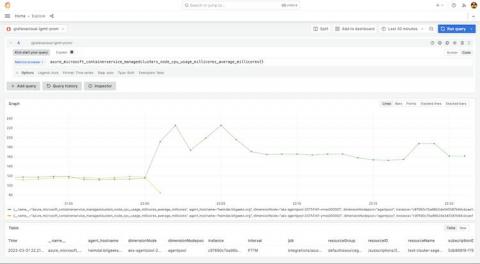
How to optimize resource utilization with Kubernetes Monitoring for Grafana Cloud

Overprovisioning or underprovisioning your Kubernetes resources can have significant consequences on both your budget and your app performance. By underprovisioning your Kubernetes infrastructure, you’ll end up with lagging, underperforming, unstable, or non-functional applications. On the opposite end of the spectrum, overprovisioning is a costly issue: Organizations spent almost $500 billion on cloud resources in 2022, yet an estimated 30% of those were wasted.

How We Designed Qovery To Manage Thousands of Kubernetes Clusters with a Single Control Plane

Deploying and managing applications in the cloud can be complex and time-consuming, especially when using Kubernetes. However, Qovery has made this process much easier with its platform abstracts away the complexity of Kubernetes and provides developers with the tools they need to manage their deployments. But how does Qovery manage thousands of Kubernetes clusters with a single control plane?

Kubernetes Logging

You'll notice that monitoring and logging don't appear on the list of core Kubernetes features. However, this is not due to the fact that Kubernetes does not offer any sort of logging or monitoring functionality at all. It does, but it’s complicated. Kubernetes’ kubectl tells us all about the status of the different objects in a cluster and creates logs for certain types of files. But ideally speaking, you won't find a native logging solution embedded in Kubernetes.

Kubernemlig's Multi-Cluster DNS Setup

Are you ready for a geeky deep-dive into the world of multi-cluster DNS setups? Buckle up, because we're about to embark on a journey through the magical realm of domain name resolution! A multi-cluster DNS setup is like the ultimate TARDIS for your servers. Just like how the TARDIS can transport the Doctor to any location in time and space, a multi-cluster DNS setup allows users to access multiple clusters of servers from anywhere in the world, using a single, convenient domain name.

Heroku vs Elastic Beanstalk: What to choose?

When it comes to deploying web applications, two popular options are Heroku and AWS Elastic Beanstalk. While both services aim to simplify the deployment process, they differ in several key areas. In this article, we'll compare Heroku and AWS Elastic Beanstalk and discuss the pros and cons of each service.

How Delivery Hero uses Kubecost and Datadog to manage Kubernetes costs in the cloud

As the world’s leading local delivery platform, Delivery Hero brings groceries and household goods to customers in more than 70 countries. Their technology stack comprises over 200 services across 20 Kubernetes clusters running on Amazon EKS. This cloud-based, containerized infrastructure enabled them to scale their operation to support increasing demand as the volume of orders placed on their platform doubled during the pandemic.

Monitoring with Custom Metrics

By kickstarting a monitoring project with Prometheus, you might realize that you get an initial set of out-of-the-box metrics with just Node Exporter and Kube State Metrics. But, this will only get you so far since you will just be performing black box monitoring. How can you go to the next level and observe what’s beyond? They are an essential part of the day-to-day monitoring of cloud-native systems, as they provide an additional dimension to the business and app level.