Operations | Monitoring | ITSM | DevOps | Cloud

The latest News and Information on Containers, Kubernetes, Docker and related technologies.

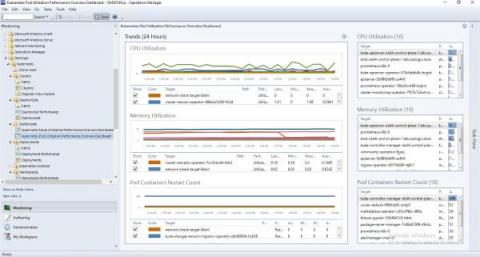
Expedite infrastructure investigations with Kubernetes Anomalies

Modern Kubernetes environments are becoming increasingly complex. In 2021, Datadog analyzed real-world usage data from more than 1.5 billion containers and found that the average number of pods per organization had doubled over the course of two years. Organizations running containers also tend to deploy more monitors than companies that don’t leverage containers, pointing to the increased need for monitoring in these environments.

Need a GPU For Your Next App? Cycle Has Your Back!

After months in development, we are thrilled to announce the launch of Cycle.io's support for NVIDIA GPUs (Beta). Combined with an already powerful platform that enables developers to focus on building, rather than managing, the addition of GPUs will further empower the development of accelerated applications which require a higher level of compute power.

Migration Guide - Jenkins to Razorops

Organizations are becoming more aware of the advantages of upgrading their continuous integration and continuous delivery (CI/CD) pipelines and moving them to the cloud, from lowering infrastructure costs to eliminating security threats. But carrying out a transfer is challenging, especially when a variety of platforms and technologies are involved.

Are your applications secured end-to-end?

Kubernetes has grown immensely, and its use within organizations is maturing. While Kubernetes’ growth is exciting, security concerns around applications deployed on Kubernetes are mounting. Red Hat performed a survey with hundreds of DevOps professionals, and it showed that 55% delayed application releases due to security issues.

What is eBPF and what are its use cases

With the recent advancements in service delivery through containers, Linux has gained a lot of popularity in cloud computing by enabling digital businesses to expand easily regardless of their size or budget. These advancements have also brought a new wave of attack, which is challenging to address with the same tools we have been using for non cloud-native environments.

Introducing Splunk Operator for Kubernetes 2.0

The Splunk Operator for Kubernetes team is extremely pleased to announce the release of version 2.0! This represents the culmination of many months of work by our team and continues to deliver on our commitment to provide a high-quality experience for our customers wishing to deploy Splunk on the Kubernetes platform.

What Is Helm in Kubernetes?

Helm is a deployment tool that simplifies installing, configuring, and managing Kubernetes clusters. Anyone familiar with writing Kubernetes manifests knows how tedious it is to create multiple manifest files using YAML. Even the most basic application has at least 3 manifest files. As the cluster grows, the more unwieldy the configuration becomes. Helm is one of the most useful tools in a developer’s tool belt for managing Kubernetes clusters.

The Secret Ingredient for Faster Deployment: Use On-demand Environments

If you are part of a DevOps or Cloud engineering team struggling to set up and maintain proper environments, then this article is for you. We will discuss “On-demand” environments in detail. We will go through its benefits, how development teams can take advantage of it, and how Qovery’s on-demand environments give you a competitive advantage in the business.