Alert on your Loki logs with Grafana
One of the most frequent Loki questions I get is how you can alert on log contents. With Grafana and the latest version of Loki that's now possible! Let's checkout how log alerting works in this video.


The latest News and Information on Log Management, Log Analytics and related technologies.
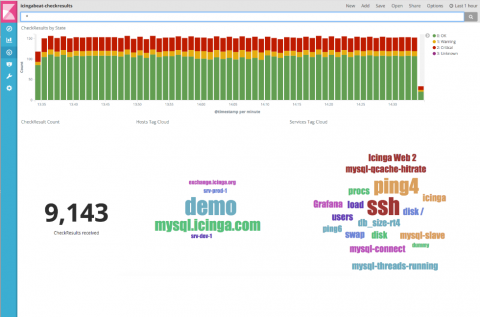
We’re happy to announce a new version of icingabeat, v7.5.2. With this release we ensure the compatibility with Elasticsearch 7.x and Logstash 7.x. Icingabeat is an Elastic Beat that fetches data from the Icinga 2 API and sends it either directly to Elasticsearch or Logstash. To get you data forwarded, icingabeat connects to the Icinga 2 event stream and receives all events happening within Icinga in real time.
Phishing attacks aren’t going away anytime soon. The numbers from Verizon’s 2019 DBIR Report and SANS Institute prove only one thing: When you’ve done all you can to protect against phishing attacks, that means it’s time to do more.
Logstash is an open source data processing pipeline that ingests events from one or more inputs, transforms them, and then sends each event to one or more outputs. Some Logstash implementations may have many lines of code and may process events from multiple input sources. In order to make such implementations more maintainable, I will show how to increase code reusability by creating pipelines from modular components.
ETHDenver connects developers, technologists, cypher punks, coders, crypto-economists, designers and makers to build on Ethereum, making it the perfect place to debut Splunk Connect for Ethereum. The use cases we saw added observability to blockchains like Ethereum mainnet and sidechains in real time. As the event went on, use cases and requests continued to pop up (which you'll see below); the app was used to index not just ethereum mainnet, but also sidechains such as xDai and OST Mosaic.
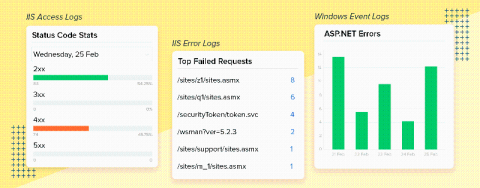
Unresponsive and slow pages are both terrible for any website. Even with the best user interface (UI), unresponsive and slow pages negatively affect the customer experience and the brand's reputation. Research from the Nielsen Norman Group has determined that the average user will leave a site after about 10 seconds of waiting for a page to load. If your page takes longer than a few seconds to load, it's time you check your IIS server logs.
Given the complexity of large enterprise environments, coupled with the diversity of the vendor landscape, there is no single, agreed-upon “best” way to buy security. The battles continue between CAPEX or OPEX, net-30 or net-90, annual or multi-year, perpetual or subscription. One thing we do know, however, is that all too often the consumer pays for something he or she does not use.