Operations | Monitoring | ITSM | DevOps | Cloud

We redesigned Spike

Last Christmas, after everyone had gone quiet for the holidays, I sat down with a pen and some paper and started drawing Spike. Not the Spike we actually had, but the Spike I wanted, the one I had been carrying around in my head for a long time without ever really putting it down anywhere. A little while later I brought a few of those screens into Figma and showed them to the team over coffee one afternoon.

What is Compliance in ITAM? Regulations, Penalties & Best Practices

Managing IT assets smoothly is not an easy task. Organizations depend more on technology to execute their operations these days. Hence, the requirement for effective IT Asset Management (ITAM) has grown considerably. However, beyond merely managing these assets, ensuring compliance with relevant ITAM regulations and standards matters just as much. And, in this race to keep up with changing regulations, you are not alone. Many organizations face the same challenge.

How to Reduce On-Call Burnout in IT Teams

On-call duty is a high-stakes reality in modern IT and digital ops teams. While essential for ensuring system reliability, the chronic stress it creates doesn’t have to be a given. On-call burnout is a serious threat to your team’s well-being and your organization’s performance, but it isn’t inevitable. It’s a systemic problem, not a personal failing.

Top Mobile Incident Notification Systems for IT Teams 2026

Modern IT incidents don’t stick to a 9-to-5 schedule. System failures, security breaches, and performance degradations can happen at any time, and today’s distributed teams must respond instantly, wherever they are. The ability to receive, acknowledge, and manage incidents directly from a smartphone is no longer a luxury—it’s a core requirement for effective incident response in 2026.

Upsun included in IDC ProductScape on worldwide cloud deployment-centric platforms, 2026

Upsun is included in IDC ProductScape guide to worldwide cloud deployment-centric platform capabilities. Building and scaling applications has never been more complex or more critical. Engineering teams are under constant pressure to ship faster, manage increasingly complex infrastructure, and adapt to the rapid rise of agent and AI-powered development. Choosing the right platform to support these demands is an important decision for technology organizations.

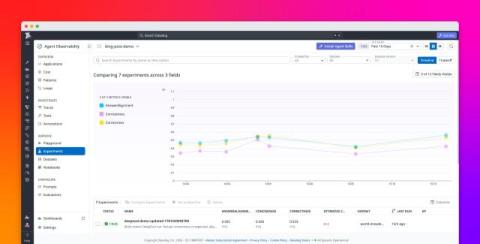
Using Evaluation Frameworks with Agent Observability

AI teams have invested heavily in evaluation frameworks, yet getting those frameworks beyond local experimentation remains challenging. Teams using open source libraries like DeepEval and Pydantic Evals gain flexibility and research-grounded metrics, but operationalizing those evaluations still requires brittle custom integration code that doesn’t scale.

Builder in the loop: Tony Rogers on stress-testing AURA before production

Builder in the loop is a Mezmo interview series focused on the engineers, product leaders, and operators shaping AURA, an open-source, MCP-native agent harness for production operations. This installment features Tony Rogers, whose work on AURA is less about building new features and more about trying to break them before users can.

Capital planning is not one-size-fits-all: How agency size shapes critical capital decisions

Every capital program depends on a series of decisions that determine whether projects move from ideas to successful outcomes. How projects are defined, prioritized, funded, approved, monitored, and communicated ultimately shapes an agency's ability to deliver on its commitments.

7 Ways Digital Protection Services Are Safeguarding High-Risk Individuals in 2026

In today's hyper-connected world, personal security no longer begins and ends with physical protection. For executives, entrepreneurs, public figures, journalists, activists, and other high-risk individuals, digital threats have become just as significant as real-world risks. A single exposed piece of personal information can open the door to identity theft, financial fraud, online harassment, reputational damage, or even physical safety concerns.