Operations | Monitoring | ITSM | DevOps | Cloud

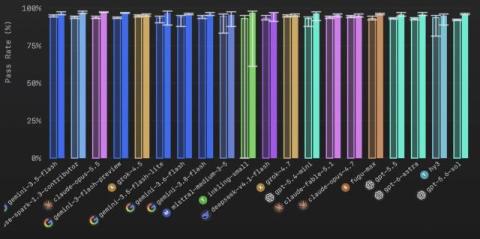
Models Are Getting Really Good At Git

I built GitBench because I was curious about how well models did git things. It turns out that it was a good idea because some models will surprise you. Some of the frontier models were remarkably bad and some cheap open models punched above their weight class. But, as they say, “the times they are a changin’”. Before I go too deep into the latest results, you may want to read up on GitBench and what it is and why I built it in the previous blog post.
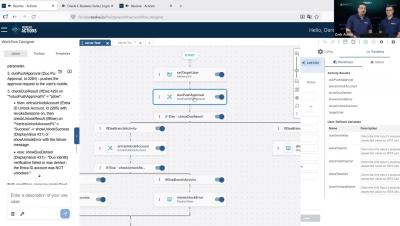

How to Build AI Agents That Take Action | Resolve Agent Lab Demo

How do you build enterprise AI agents that actually take action? In this live demo, Resolve shows how Agent Lab helps IT and operations teams build, test, and deploy AI agents using natural language. See how teams can turn business requirements into executable workflows, give agents specific skills, establish guardrails, and automate real IT resolutions across enterprise systems.

The Infrastructure Question Hiding Inside Every Government AI Conversation

Government AI strategies are ultimately constrained or enabled by the infrastructure beneath them. Agencies that can continuously validate controls, maintain visibility, and automate policy enforcement will be better positioned to deliver AI capabilities securely, responsibly, and at scale.

Before your AI bottleneck gets worse: what to put in place now

Your engineers have agents running. Not one agent, but several, spread across the team. Some run in a terminal on a laptop, some are wired into your CI jobs, and some live inside whatever coding tool each person prefers. Each one got set up separately, by whoever needed it, in whatever way worked that week. That is the state most teams are in right now. Code stopped being the slow part a while ago.

Cost per AI outcome: tying AI spend to results

Cost per AI outcome is your total attributed AI spend divided by the business results it produced: resolved tickets, converted leads, merged pull requests. It includes the cost of failed attempts, sits at the top of the AI unit-cost ladder, and it's the number that makes vendor outcome pricing, ROI claims, and build-versus-buy decisions comparable.

How Insurtech Is Digitising the Rental Car Claims Process: What the Industry Looks Like in 2026

Rental car claims in 2026 run on a different track than they did five years ago. Paper forms, email chains, and weeks of silence have given way to mobile-first workflows where travelers photograph damage, upload invoices, and receive reimbursement decisions within days. By 2026, claims processing has become more immediate and data-driven, driven by artificial intelligence models trained on millions of damage images and invoice line items. The rental car insurance market is valued at over $11 billion, driven by digital-first conveniences and a new generation of standalone providers.

Why Is GPU Utilization Low During AI Training? 6 Bottlenecks to Check

You bought the GPUs to make AI training faster. So why are they sitting idle? When GPU utilization drops during a training run, the obvious answer is to blame the accelerator. Maybe the workload is too small. Maybe the GPU isn't powerful enough. Maybe it's time to add more hardware. But what if the GPU isn't the problem at all? A training workload is only as fast as the infrastructure feeding it.

Hyperping MCP: Run Incidents, Status Pages and Maintenance

Summarize with ChatGPT Claude The Hyperping MCP server now has 49 tools: 28 that read and 21 that write. An agent connected from Claude Code, Cursor, Codex or another MCP client could already manage monitors, publish a status page incident and schedule maintenance. It can now do most of the rest: declare an incident and page on-call, acknowledge and escalate it, correct what was posted on the status page, create and configure status pages, and reschedule, end or cancel maintenance.

From Meeting Rooms to the Contact Center Floor: How Krisp Assists Agents on Every Live Call

Contact centers are where companies do their talking at scale. Thousands of agents, dozens of live calls each per shift, and on the other end a stranger with a problem and a finite amount of patience. A ten-second lookup, repeated across a few million calls a year, is a budget line.