Mailchimp
Not subscribed to OpsMatters Newsletter


In March 2021, Microsoft announced Operator Connect, a new way for organizations to connect Microsoft Teams to a telecom provider. From an enterprise buyer’s perspective, Operator Connect delivers a new “apps store” type of experience to enable organizations to choose a telecom provider and connect Teams users to the PSTN from the Teams admin center. Equally important, Operator Connect enables a new set of menu-based user configuration tools within the Teams admin center.
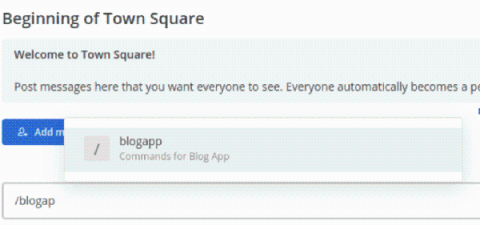
In the last few months, we have been working on a new Apps framework for developers. The idea behind this framework is to make it easier for more developers to integrate external applications or their own applications into Mattermost. But wait a moment, don’t we have Plugins for that? Yes, but Apps provide some advantages to developers over Plugins.
Most everyone has some source of information on the health of their environments. Your experts know where to go and what to do when you get those cryptic messages and log files. To those content with the deep knowledge and where events and log files supply you with everything you need, I applaud you – you belong to a rare breed. Combing through logs or events takes time and effort, and rarely does it yield the speediest “return-to-service” solution.
Kubernetes is the de-facto platform for orchestrating containerized workloads and microservices, which are the building blocks of cloud-native applications. Kubernetes workloads are highly dynamic, ephemeral, and are deployed on a distributed and agile infrastructure. Although the benefits of cloud-native applications managed by Kubernetes are plenty, Kubernetes presents a new set of observability challenges in cloud-native applications. Let’s consider some observability challenges.
The content delivery network (CDN) has been an integral part of application infrastructure for more than two decades. A CDN is critical to the end-user experience, but it is no longer considered to be just a caching server. It has evolved to provide security from cyber threats, including DDOS attacks along with front end optimization. Although CDN services are now an indispensable part of any application infrastructure, visibility into CDN performance remains limited.
We’re eating at restaurants again. We’re seeing family after too long apart. Some of us may even be returning to the office. But, that doesn’t mean that the pressure is off for digital services, and growing in operational maturity still remains top of mind. While the digital transformations have been taking place for the last two decades, COVID-19 added pressure to speed initiatives.
With Elastic 7.14, the filestream input, the successor of log input, is now generally available in Filebeat. This new, superior input provides better support for reading active log files, with faster reaction time when there is backpressure in the system, quicker registry updates, better cooperation with external log rotation tools, and more.
Cybercriminals do not discriminate against the organization, people or industry they target. These actors look to exploit vulnerabilities in resources to intercept valuable data from small and medium-sized businesses (SMBs). Cyberattacks are inevitable, and organizations must have the right controls and information security systems to mitigate the impact of an attack.