Mailchimp
Not subscribed to OpsMatters Newsletter


In this tech tip, we are focusing on HLS (HTTP Live Streaming), a streaming protocol released by Apple in 2009. HTTP Live Streaming is widely used and it isn’t just limited to streaming services like Netflix or YouTube – it’s an important protocol for all content providers and CDNs. You’ll basically find HLS anywhere people want on-demand streaming.
Today we finally have great news to share for everyone using Icinga to monitor Hyper-V and Windows Cluster environments. For quite some time we’ve been working on multiple new plugins to provide better monitoring option for Hyper-V and Windows Cluster. The new plugins are based on our PowerShell framework provided by Icinga for Windows. For the new plugins we decided to provide a preview first, in favour of a final release.
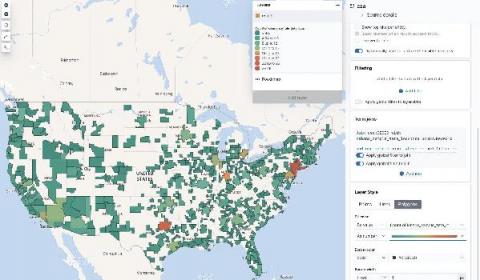
Want to create a map of where your users are? With the GeoIP processor, you can easily attach the location of your users to your user metrics. Right out of the box, Kibana can map this traffic immediately by country or country subdivision: Plus, the new User Experience app for Elastic APM automatically creates maps based on monitoring data: But what if you want to take this one step further and create maps with different regions?
Recently, I saw a video from a really great developer and YouTuber, Ben Awad, where he discussed Serverless not make any sense. Even though I really enjoyed the video, I am not sure if the author’s points about serverless are entirely valid, and I want to discuss them in this article.
As the Trump Administration comes to a close, there is no better time than the present to reexamine the Department of Defense Digital Modernization Strategy and its potential sustainment beyond January 2021.
Recently, I’ve been on a mission building a new Microsoft Office 365 Email Add-on for Splunk. This has been built for use with Splunk Enterprise, while making sure that it properly supports Splunk’s Common Information Model (CIM). CIM is paramount when wanting data to play nicely with Splunk Enterprise Security.
There’s no better time than now to dedicate effort to reliable software. If it wasn’t apparent before, this past year has made it more evident than ever: People expect their software tools to work every time, all the time. The shift in the way end-users think about software was as inevitable as our daily applications entered our lives, almost like water and electricity entered our homes.