Operations | Monitoring | ITSM | DevOps | Cloud

How Network Documentation Software Keeps Network Diagrams Current

When did anyone last open your network diagram and trust what it showed? A diagram drawn in a static drawing tool is accurate on the day it is saved. One quarter, two circuit upgrades and a hardware refresh later, it describes a network that no longer exists. Nothing warns you that this has happened. The file still opens, still prints, and still gets attached to change requests, which is what makes it risky during an incident.

Storage Monitoring Tools and the KPIs Behind Each Failure Domain

When an application slows down, how long does it take to confirm whether storage caused it? The answer depends entirely on whether anything is collecting from the array itself. The server dashboard reports healthy CPU and memory, the network graphs look clean, and the array holding the data says nothing at all. Storage failures announce themselves late.

InvGate Asset Management as an AMDB: CI Dependencies And The Complete Asset Record

Ask an IT administrator what they mean when they say they need a Configuration Management Database (CMDB), and more often than not, they are describing something else entirely: knowing what assets they have, who is responsible for each one, and what breaks if one of them fails. That is the job of the Asset Management Database (AMDB), the lifecycle record built to answer exactly those questions.

How to Make DevOps Dashboards and ITSM Content Easier to Read with Typography

Operations teams live inside text. They read alerts, dashboards, logs, runbooks, release notes, escalation messages, postmortems, service catalogs, and knowledge base articles. During normal work, that text helps teams understand systems. During an incident, it can decide how quickly people separate a signal from noise.

SOTI MobiControl Integration With InvGate Asset Management

A logistics company running 2,000 Android devices across 15 distribution centers manages that fleet through SOTI MobiControl, which pushes apps, enforces policies, and tracks location every day. None of that visibility used to reach the company's core IT inventory. The IT team filled the gap with a weekly CSV export that drifted out of date within days: a reassigned tablet kept showing under its old owner, and a decommissioned scanner stayed in the count for months after it was retired.

Built-in Action Connectors in InvGate Service Management: What They Do

InvGate Service Management includes a no-code workflow builder that helps teams automate processes such as onboarding, access requests, and offboarding. Built-in Action Connectors extend those workflows beyond the platform, allowing them to retrieve information from external tools or trigger actions in them instead of stopping when another system is involved. You can keep processes moving across the tools your teams already use, reducing manual steps and keeping related actions connected.

How to Monitor Docker Containers You Cannot Rebuild or Redeploy

How long would it take you to get one new line of code into the container running your payment service? In a lot of organizations, the answer runs to weeks, because the change has to clear a build owner, a test cycle, and a release window that nobody wants to open early. That timeline is why so much monitoring advice fails on contact. Most of it opens by telling you to add a library, rebuild the image, and push a new version. If you could do that this afternoon, you would have done it already.

How eBPF Observability Monitors Docker Containers Without a Rebuild

How many containers are running in your production environment right now that nobody can see inside? A vendored service, a compiled binary, an application whose build pipeline left with the developer who wrote it: each one runs, serves traffic, and reports nothing. Instrumenting those workloads means a code change, a rebuild, and a redeploy, and on these containers none of the three are available.

ACSC Essential 8: Without the Complexity

Gain cyber resilience with ACSC Essential Eight strategies Simplify Essential Eight compliance and cyber resilience with Ivanti and see how to reduce the attack surface with discovery, patching and privilege control —without the added complexity.combine asset discovery, vulnerability management, patching, application control, privilege management, and compliance reporting.

Workspace now reads your tickets and automates the fix

IT teams don’t need another place to look for problems. They need a faster way to understand what is happening, decide what to do next, and act before disruption spreads. That has always been the promise of Workspace. It gives IT teams a conversational way to investigate issues, surface insights from Nexthink data, and understand what needs attention across the digital workplace. Now, Workspace is entering its next phase.

10 Best Session Replay Software & Tools for 2026

Some frontend bugs never get fixed because nobody can prove they happened. The user cannot describe what they clicked, and the error log shows nothing. The best session replay software closes that gap by rebuilding the visit itself. If you want the mechanics first, our guide to what session replay is covers how the recording is built and played back. Choosing between the tools is the harder part, because three very different kinds of product now sell the same feature.

A Practical Guide to Core Web Vitals Optimization for Better UX and Faster Conversions

When a page starts losing customers, how long does it take to find out which one? The evidence lives in your visitors' browsers, and standard infrastructure tooling measures servers instead. A speed test run from an office machine answers a different question entirely. Pages that clear every internal check can still turn away a quarter of the people who reach them.

10 Best Real User Monitoring Tools Compared for 2026

Most IT teams learn their application feels slow when a customer complains. Server metrics never measure what a person on a phone waits for. The best real user monitoring tools close that gap by collecting timings from your users' browsers. Choosing one got harder this year, because the measurement standard moved. In this blog, we compare the best tools for real user monitoring, including their pros, cons, and key features. By the end you will know which one fits your stack.

Top 10 Digital Experience Monitoring Tools in 2026

Server dashboards can look healthy while users wait. Only 51% of the 1,000 most popular mobile sites pass Core Web Vitals, according to the HTTP Archive's 2025 Web Almanac. Closing that gap is the job of digital experience monitoring tools. Some watch customers on your website and mobile apps, others watch staff on laptops and virtual desktops, and a third watches the network in between. Pick the wrong type and you lose a review cycle.

CCPA Compliance for IT Teams: How to Handle Data Subject Requests on Time

How many privacy requests is your organization working on right now, and how many of them are still inside their legal deadline? The answer usually lives in several places at once. Shared mailboxes hold some, web forms hold others, and legal keeps a tracker of its own. That scattering is the problem. A CCPA request carries a hard statutory deadline and a documentation duty behind it, yet privacy work is the one regulated workload in most organizations that never entered the service management system.

What Is Session Replay? How It Works, What It Records, and When It's Legal

A customer reports that checkout failed twice before they gave up, then stops replying to the support thread. What do you actually have to work with? A timestamp, a browser string, and a description written by someone who was not looking at the console. Session replay answers the question that ticket cannot. It rebuilds that single visit in the browser and plays it back step by step, so the click that failed, the field that rejected input, and the script error that fired alongside it appear in sequence.

Freezer Management Software: How Food and FMCG Companies Track, Maintain and Control Freezers in the Field

For food and FMCG companies, managing freezers becomes more complex once equipment moves outside warehouses and company facilities. Freezers may be placed at supermarkets, retail stores, restaurants, distributors, convenience stores, and other customer locations, often across hundreds of cities or territories. At that scale, spreadsheets and manual field checks make it difficult to answer basic operational questions. Where is a particular freezer? Which outlet is responsible for it?

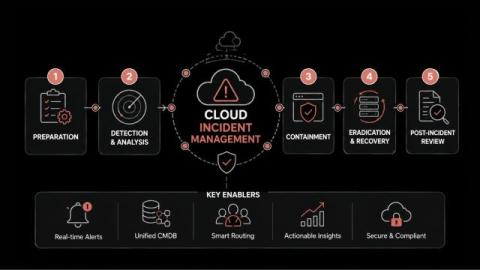
Cloud Incident Management: Process, Tools, and Practices

How do you resolve an outage your organization has no authority to fix? A managed database drops into read-only mode and stops accepting writes. There's no host to reach, no configuration file to edit, and no restart command available to your engineers. Cloud incident management begins at that boundary, where the response depends on a support channel and a provider status page. Plenty of what you already know still applies here.

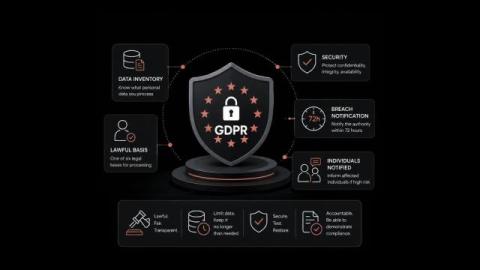
What Is GDPR Compliance? Requirements and How to Meet Them

Most teams can describe their GDPR obligations. Far fewer can produce the records that prove they met them. That gap is where GDPR compliance gets hard. The regulation reads as legal text, so it usually gets treated as legal work. About a third of it lands on the IT team instead: records of what you process, security controls that have to hold up, and deadlines measured in hours. Nobody asks for that evidence on a quiet week.

How to implement an internal employee technical support portal step by step

An internal technical support portal allows you to centralize tickets, requests, help articles, and workflows in a single location for the entire company. The goal is not only to optimize IT work but also to reduce the use of emails, direct messages, and other informal channels that often result in requests without follow-up and visibility. But implementing a portal doesn't guarantee that employees will use it.

Third-Party Patch Management: How Application Patching Works and Where It Breaks

Most patch programs are built around the operating system. The vendor calendar is predictable and the tooling is mature. That is the smaller half of the job. Most of the software on a typical endpoint comes from somewhere else. Third-party patch management covers that half, and most teams run it with far less structure. The gap is easy to miss in day-to-day reporting. Windows Update finishes on a laptop, and the machine reports as patched. That report covers the operating system and nothing else.

What is Port Mirroring and How does a SPAN Port Work?

Your dashboard shows every interface green, the counters look clean, and the application owner still insists the network is dropping their transactions. Where do you look next? Availability data tells you a link is up. It cannot tell you what crossed that link or how long the server took to answer. Only the packets carry that, and port mirroring is how most engineers get a copy without cutting into a live cable.

Cooler Management Software: How Beverage Companies Track, Maintain and Optimize Coolers in the Field

For beverage companies, deploying a cooler at a retailer, restaurant, supermarket, or distributor is only the beginning of the asset lifecycle. Once coolers move outside company facilities, maintaining visibility becomes far more difficult. Operations teams need to know where each cooler is located, who is responsible for it, whether it has been transferred, if maintenance is required, and whether the equipment is being used effectively.

The Factory Floor's Digital Blind Spot: Hidden IT Risk in Manufacturing

Manufacturing organizations have spent years strengthening the systems, processes, and supply chains that keep production moving. Yet some of the disruption affecting operations begins in places that are much harder to see. A slow engineering workstation, inconsistent access to a production application, a login delay at shift change, or a device that needs repeated intervention may not look like a plant-wide outage, but each one can add friction to work that is already tightly sequenced.

What Is Cybersecurity Compliance? Frameworks and Requirements

Most IT teams are asked to meet more than one security framework at once. Almost nobody gets more budget or more people to do it. That is the real shape of cybersecurity compliance. A sales deal needs SOC 2, a hospital contract drags in HIPAA, and card payments put PCI DSS on top of both. Each one arrives with its own auditor, its own vocabulary, and a deadline somebody set without asking you. So the same controls get built three times over.

What is Network Intelligence? A Guide for IT Teams

"This is the third slowdown at the regional offices this quarter. What is actually causing it, and what will it cost us to stop?" Questions phrased like that come from a business head rather than an engineer, and a dashboard screenshot will not answer them. Most network operations groups can produce evidence that something happened. Producing an explanation of why it happened, in language a finance director will accept, takes hours of manual correlation across separate consoles.

Best Help Desk Software in 2026: Tested, Ranked & Compared

We evaluated the 10 best help desk software platforms of 2026 on features, pricing, deployment, and real-world fit, from unified IT asset-and-service tools to free and customer-facing options. Alloy Navigator leads for teams that need assets and the service desk in one place. The right pick depends on your users, compliance needs, and true budget, not the longest feature list. All prices below were verified in July 2026 and are list prices; add-ons and renewals often raise the real total.

What Is sFlow? A Guide to Sampled Flow Monitoring

What do you do when the switch carrying most of your traffic is the one device that cannot tell you what is on it? On high-speed core and data centre links, full flow export pushes device CPU past a comfortable line, so the export gets switched off and the busiest segment quietly becomes the least visible one. sFlow was built for that exact situation.

10 Best MySQL Monitoring Tools Compared for 2026

Your monitoring console probably covers the switches, the hosts, the VMs and the application traces. The database tier is the gap. It tends to live in a separate tab. Somebody opens that tab once the incident bridge has already started. That gap got more expensive this year. On 21 April 2026, Oracle moved MySQL 8.0 to Sustaining Support. The version most production estates still run no longer gets new fixes. Good MySQL monitoring tools close the gap.

How the Vulnerability Management Lifecycle Runs from Discovery to Verified Fix

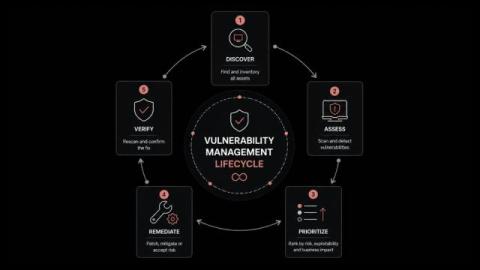
Who in your organization can say, without opening three separate systems, whether last month's critical findings are actually closed? A deployment record answers half of that. The other half needs a rescan, and the rescan often never happens. The vulnerability management lifecycle is that question written down as a repeatable process. It runs from knowing what you own through to proving a fix landed, and it restarts the moment it closes.

How to Build and Scale Unified Asset Intelligence for AI Success

Every IT leader has felt this tension: your organization has invested in AI, automation and digital operations, and yet outcomes still fall short of expectations. Even with the right tools and intent, you won’t be able to fully realize the value of your AI investments if they’re built on an unsteady foundation.

8 Best Vulnerability Management Tools for Scanning, Prioritizing and Patching

A vulnerability scanner will hand you more work in one afternoon than the service desk can clear in a quarter. Thousands of findings arrive ranked by severity, every one of them technically actionable. Fixing them takes weeks, and in most organizations the backlog grows faster than it clears. That gap is what this guide is about. Every tool here scans reliably, scores findings sensibly and reports clearly.

How to Measure Digital Employee Experience and Prove IT's Real Impact

Talking about Digital Employee Experience (DEX) has moved beyond being a trend and become a strategic necessity. In a scenario where almost all work depends on technology, employees’ digital experience directly influences productivity, engagement, the ability to innovate, and even the company’s financial results. The challenge is that many organizations still try to assess DEX using only traditional indicators, such as ticket volume or system availability.

The Industrial Mobile Browser Built for Supply Chain Work

Warehouse workers don’t think about whether their mobile interface runs on a browser. They’re focused on getting the job done. But for operations and IT teams evaluating or upgrading mobile technology in supply chain environments, platform choice matters more than most people realize. Consumer mobile browsers such as Safari, Edge and Chrome are useful tools designed for everyday web use. They help people search, shop, read, collaborate and access web applications from almost anywhere.

What are the Key Features and Evaluation Criteria for Vulnerability Assessment Tools?

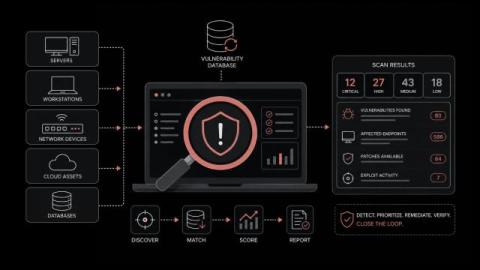
How many findings from your last vulnerability scan have been verified as fixed? For most IT functions, the scan report is easy to produce, and the proof of closure takes far longer to assemble. That difference tends to surface at the worst possible moment, usually an audit or a post-incident review. Vulnerability assessment tools are meant to end that uncertainty. They inspect systems, match what they find against public vulnerability databases, and rank each weakness by how dangerous it is.

What Is SOC 2 Compliance? Requirements, Controls, and Evidence

Your largest prospect has asked for your SOC 2 report. The deal sits still until you produce one. Most teams handle the first half of SOC 2 compliance fine. They control access. They run backups. They put changes through approval before anything ships. The second half is what stops them, and that half is proof. Your policy says access gets reviewed every quarter. The auditor wants the dated review, the signature on it, and the same record from eight months ago.

The Hidden Risk of Scaling AI Without a Single Source of Truth

AI doesn’t fail because it’s not smart enough—it fails because it can’t see the full picture. In this video, Sterling Parker, Ivanti’s SVP of Technical Solutions and Services, explains why fragmented and "dirty" data is the biggest obstacle holding AI back for organizations today. When AI pulls from disconnected systems, it’s forced to fill in the gaps with its own intelligence, leading to hallucinations and outcomes that are hard to trust. Sterling breaks down how these "cracks in the foundation" can actually create new security vulnerabilities when scaled too quickly.

Vulnerability Assessment and Penetration Testing: Differences, Cadence, and Cost

What do you say when an auditor asks for evidence that your security controls hold, and all you can produce is a scan report from last month? A scan lists weaknesses. It says nothing about whether an attacker could chain three of them together and reach the customer database. Vulnerability assessment and penetration testing answer two different questions about the same environment. The first asks what is exposed right now. The second asks what someone with intent and skill could do with that exposure.

What Is the MITRE ATT&CK Framework? A Guide for IT Ops Teams

Most IT operations teams cannot say how much of the MITRE ATT&CK framework they already cover. The framework gets explained in the language of threat hunting and red teams. The parts that belong to infrastructure work are easy to miss. And then, coverage questions get answered with a guess. The mismatch costs time on both sides. Security asks for a coverage answer that ops has no clean way to produce. Yet the controls that stop a large share of those techniques already sit with your team.

The Margin Leak Business Services Firms Can't Bill Away

Business services firms are built on people’s time, judgment, and credibility. When a consultant loses half an hour before a client workshop, a legal team is stuck waiting for a document system, or a service delivery group has to move conversations elsewhere because collaboration tools are unreliable, it may not register as a major IT event. It still changes the economics of the work, because skilled time is being spent compensating for the environment instead of serving the client.

What Is a Vulnerability Scan? How It Works and What the Results Mean

How many machines in your environment are running software with a publicly documented security flaw right now? That figure comes from an asset inventory, and asset records age quickly once they are written. The gap is rarely about tooling budgets. Software inventory across a few hundred endpoints shifts every week, while the published catalogue of flaws in that software grows every single day. Manual inspection loses that race inside the first month.

What Is Network Latency? Causes, How to Measure It, and Ways to Reduce It

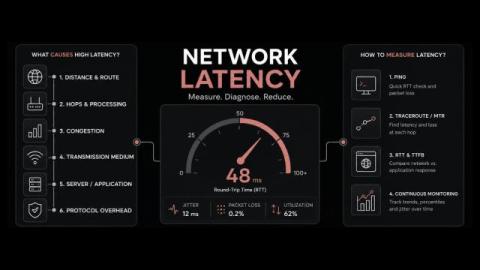
Slow application complaints are among the hardest tickets in IT to close. The network gets blamed first; the dashboard shows nothing wrong, and the ticket bounces between teams for a week. Network latency sits at the centre of that argument more often than any other metric. Most dashboards report latency as a single average, and that average hides the slow requests people actually notice. A path can average 30 ms and still drop a call every ten minutes.

DEX Data Is Too Valuable to Limit to IT

For many organizations, digital employee experience (DEX) is still viewed as an IT project. It measures endpoint health, identifies performance issues, and helps service desks resolve incidents faster. While that’s useful, it’s also far too small a vision. In order to get the greatest return from DEX, organizations have to stop treating it as exclusively an engineering capability and started treating it as an equally powerful intelligence capability.