Using better visibility to tame India's 'digital elephant'
Have you heard the tale about the blind men and the elephant? A group of blind men who’ve never seen an elephant touch different parts of the animal and try to figure out what it is.


The latest News and Information on IT Service Management, Service Desk and related technologies.
Have you heard the tale about the blind men and the elephant? A group of blind men who’ve never seen an elephant touch different parts of the animal and try to figure out what it is.
Agencies have taken a siloed approach to deploying technology solutions to meet government digitization and modernization goals. Although this allows them to roll out rich digital experiences for citizens and employees, it’s not a scalable method—nor is it effective in terms of cost and resources. Like many agencies, the U.S. Department of Labor (DOL) had several key platforms in place to drive its digitization efforts, but the management of these platforms lacked centralization.
Ensuring continuity of IT Services through effective incident management process.
Data Privacy Day is an international event observed on Jan. 28 in the United States, Canada, Nigeria, Israel, and 47 European countries. It’s a time to raise awareness about data protection best practices. At ServiceNow, one day is not enough to focus on data privacy. We prioritize protecting personally identifiable information (PII) for organizations and individuals every day of the year. One of the best ways to do that is through data anonymization.
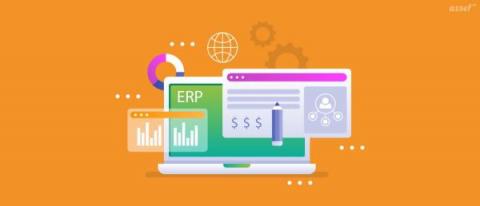
Enterprise resource planning and asset management software are both used in improving business productivity and optimizing daily operations. They both focus on growing business by integrating data from other applications. So, we can say that there are lots of similarities between these systems. In this blog, we will learn what Enterprise resource planning & Asset management software is, and its benefits.
For many IT organizations, having complete end-to-end visibility of their IT assets as well as a comprehensive understanding of integrations, dependencies and changing statuses is an ideal position rather than a reality. This is especially true for organizations with legacy on-premises systems spread across many environments. Those that were cloud native or successfully migrated to the cloud had the privilege of cloud tools to visualize individual environments.