The latest News and Information on IT Service Management, Service Desk and related technologies.
If your organization is looking to improve its IT service management (ITSM) and/or IT Operations Management (ITOM) capabilities, then it’s probably considering Artificial Intelligence for IT Operations, which is commonly called “AIOps.” But what is AIOps, and how will it help your IT organization’s IT management capabilities and, ultimately, business operations and outcomes? Let’s start with an AIOps definition.
As explained in the earlier “What’s ITOM?” blog, there are various definitions of IT Operations Management (ITOM). This variation has a knock-on for everything related to ITOM, including the relationship between ITOM and DevOps. This issue is further complicated when people and organizations have different views of what DevOps is and isn’t. Hence, we must start with a single definition for ITOM and DevOps.
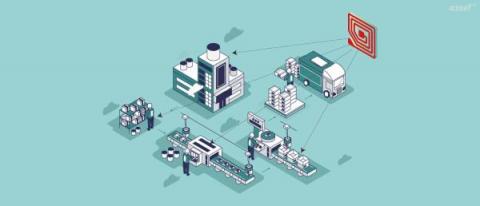
The manufacturing industry is one of the biggest industries in the world as almost all other industries are dependent on the manufacturing industry. It plays a crucial role in countries' growth and each manufacturing unit is equipped with lots of assets and equipment that are valuable to the organization. However, lots of manufacturing units do not keep track of their assets and as a result, their assets are lost, and operation delays occur frequently.
Enterprise resource planning (ERP) modernization is a huge undertaking. ERP environments are laden with customization that can increase technical debt and impede maintenance. Organizations need to achieve a clean core while delivering a consumer-grade experience that bridges various systems of record without missing a beat. ERP environments are complex and always evolving. They’re messy and busy. They require many manual processes and span multiple, siloed systems.
It can be tricky for large organizations to track employee software licenses given the multitude of applications and activities that continuously take place across the business. On a given day, a typical organization with 10,000 employees using only a dozen applications still results in more than 100 thousand application interactions. Each of these employee experiences has the potential to create IT issues that IT needs to stay ahead of without going over budget.